
By Legacium Editorial Team
How to Publish a Memoir: From Finished Manuscript to Printed Book
You have written the story. Now you need to get it into people's hands. Publishing a memoir is more accessible than most writers realize - and for family memoirs, the process can be surprisingly simple.
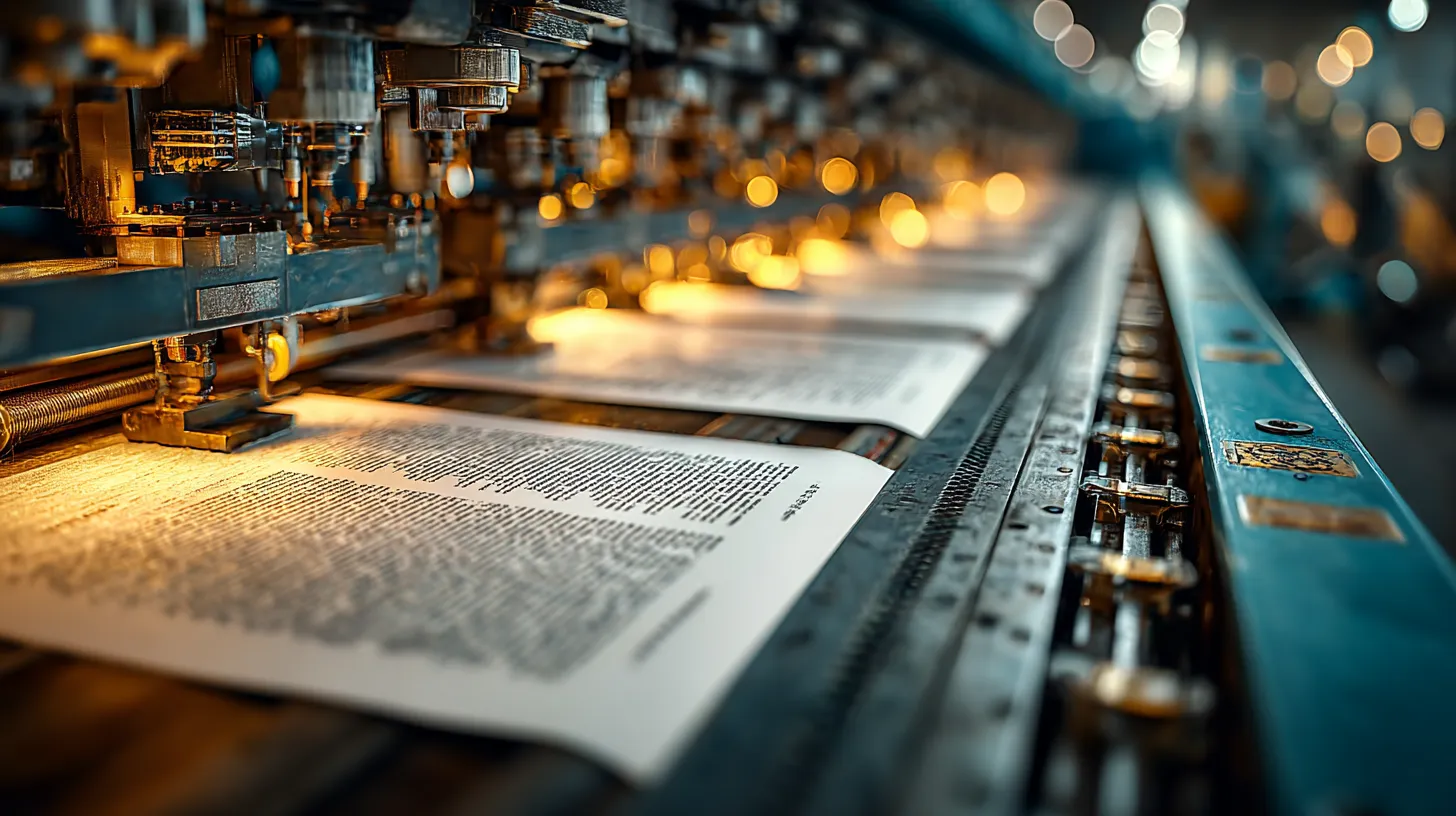
The hardest part of a memoir is not the publishing. It is the writing, the remembering, the willingness to sit with your own life and shape it into something others can hold. The emotional demands of memoir writing are real, and if you have made it through them - whether through months of careful work or a guided process that carried you through - then the path from manuscript to printed book is more straightforward than you might expect.
The publishing world has changed enormously in the past decade. You no longer need a literary agent, a New York publishing house, or a five-figure advance to get your memoir into print. According to Bowker, the agency that issues ISBNs in the United States, over 2.3 million self-published titles were registered between 2017 and 2021 - a figure that has only grown since. The tools are accessible. The quality is professional. And for a memoir intended for family rather than bookstore shelves, the process can be remarkably simple.
What are the main paths to publishing a memoir?
There are three primary routes, and the right one depends on who you are writing for. Traditional publishing involves querying literary agents, who then pitch your manuscript to publishing houses. Self-publishing means you handle production and distribution yourself, typically through a platform like Amazon KDP, IngramSpark, or Blurb. And private printing - often the best choice for family memoirs - means producing a set number of copies through a print service without any public distribution at all.
Traditional publishing is competitive and slow. It can take one to three years from accepted manuscript to bookstore shelf, and most memoirs by unknown writers do not secure a deal. According to data from the Alliance of Independent Authors, fewer than one percent of manuscripts submitted to traditional publishers are ultimately accepted. For a memoir written primarily for your children and grandchildren, the traditional route is almost certainly the wrong one. It is built for a different purpose.
Self-publishing and private printing, on the other hand, are built for exactly this. They give you complete control over the timeline, the design, the number of copies, and who receives them. And the quality of the finished product, when done well, is indistinguishable from anything you would find in a bookshop.
Is self-publishing the right choice for a family memoir?
For most family memoirs, self-publishing or private printing is not just the right choice - it is the obvious one. You are not trying to compete for shelf space at a bookstore or earn back a publisher's investment. You are trying to create something beautiful and lasting that you can hand to the people who matter most.
Self-publishing through Amazon KDP or IngramSpark makes your book available for purchase online, which can be useful if extended family or friends want to order their own copies. Private printing through services like Blurb, Lulu, or a local print shop gives you a fixed number of copies without any online listing - ideal if the memoir contains personal stories you would prefer to keep within the family.
The cost varies widely. A basic paperback through Amazon KDP can cost as little as three to five dollars per copy at scale. A hardcover with a dust jacket through IngramSpark might run fifteen to twenty-five dollars per copy. Premium options with leather-like covers, photo inserts, and archival paper can reach fifty dollars or more per copy, but the result is something that feels like an heirloom. The right memoir service will help you navigate these options based on your budget and vision.
A memoir does not need a bookstore to find its readers. It needs a family, a shelf, a moment of quiet recognition. The readers it was written for will find it.
What does print-on-demand actually mean for memoir writers?
Print-on-demand is exactly what it sounds like: books are printed individually, one at a time, as orders come in. There is no minimum order, no warehouse, no boxes of unsold books in your garage. You upload your formatted manuscript and cover design to a platform like Amazon KDP or IngramSpark, and when someone orders a copy, it is printed and shipped directly to them.
For memoir writers, this is transformative. It means you can make your book available to anyone with a link, without committing to a large print run upfront. If your cousin in Portland wants a copy, they order one. If a friend of the family hears about the book five years later, it is still available. According to Publishing Perspectives, print-on-demand now accounts for over a third of all printed books in the United States - a share that continues to grow each year.
The print quality of modern print-on-demand is excellent. The paper, binding, and cover finishes available through major platforms are comparable to traditionally printed books. The only real limitation is in specialty options - embossed covers, ribbon bookmarks, slipcase packaging - which typically require a traditional print run with a minimum order quantity.
Do you need an ISBN for a memoir you are printing for family?
It depends on your distribution goals. An ISBN - International Standard Book Number - is a unique identifier that allows bookstores, libraries, and online retailers to catalog and sell your book. If you are distributing exclusively within your family, you do not strictly need one.
Amazon KDP assigns a free ASIN (Amazon Standard Identification Number) to every book published on its platform, which is sufficient for Amazon-only distribution. However, if you want your memoir available through other retailers, libraries, or IngramSpark's distribution network, you will need an ISBN. Bowker, the sole ISBN agency in the United States, charges $125 for a single ISBN or $295 for a block of ten. Some publishing platforms, including IngramSpark and Lulu, offer free ISBNs, though these list the platform as the publisher of record rather than you.
For a family memoir, the practical question is this: do you want people outside your immediate circle to be able to discover and order the book? If yes, an ISBN is worth the investment. If the book is intended only for people you will hand it to personally, you can skip it entirely and save the cost.
How do you format a memoir for professional printing?
Formatting is where many self-published books fall short, and it is also where a small investment of time or money makes the biggest difference. A well-formatted memoir looks and feels like a real book. A poorly formatted one, no matter how good the writing, feels like a printed manuscript.
The essentials include proper trim size (6 by 9 inches is the most common for memoirs), consistent margins (wider on the inside edge to account for the spine), a readable body font at an appropriate size (typically 11 or 12 point), chapter headings with consistent styling, and correct page numbering. Front matter should include a title page, copyright page, and optionally a dedication and table of contents. Back matter might include an acknowledgments section and a brief author biography.
Tools like Adobe InDesign offer professional-grade control, but free options like Reedsy's Book Editor or even a carefully configured Google Docs template can produce excellent results. Most print-on-demand platforms provide downloadable templates for common trim sizes that handle margins and gutters automatically. If formatting feels overwhelming, hiring a freelance book designer typically costs between $200 and $500 - a modest expense for a book that your family will keep for generations.
If your memoir includes photographs, which many family memoirs do, plan for this early. Interior photos add to printing costs and require careful placement. Color interiors cost significantly more than black and white. Some writers choose to include a central photo section on glossy paper while keeping the rest of the book in standard black and white, a compromise that balances cost and visual impact.
What if you want your memoir to reach readers beyond your family?
Some memoirs grow beyond their original audience. A story that began as a family project turns out to resonate more broadly - because the era it captures is historically significant, because the experience it describes is shared by many, or simply because the writing is good enough to stand on its own. If that happens, the self-publishing infrastructure you have already built makes it easy to expand.
Listing your book on IngramSpark's distribution network makes it orderable by bookstores and libraries worldwide. A well-designed cover, a compelling description, and a few early reviews can generate organic interest. Digital editions - ebooks formatted for Kindle, Apple Books, or Kobo - extend your reach further with no additional printing cost. Creating an ebook version of your memoir typically costs nothing beyond the formatting effort if you use tools like Amazon's Kindle Create or Calibre.
But here is the truth that matters most: even if your memoir never reaches a single reader outside your family, it has already succeeded. The best memoir tools and processes exist not to create bestsellers, but to ensure that the stories that matter to your family are preserved in a form that will last. A book on a shelf, read by twelve people who knew and loved the person who wrote it, is not a small thing. It is exactly the right thing.
Publishing your memoir is the final step in a journey that began with the courage to remember, the willingness to speak, and the faith that your story is worth telling. The mechanics of printing and distribution are solvable problems. The hard work, the real work, is already done. Now you are simply choosing the vessel that will carry it forward.
Legacium
From spoken word to printed book - without the publishing headaches.
Legacium handles every step of the memoir journey, from AI-guided conversations that capture your story to professional editing, formatting, and a beautifully printed hardcover delivered to your door. No agents, no query letters, no formatting nightmares. Just your story, done right.
See how Legacium works