
By Legacium Editorial Team
Your Parents' Story Is Disappearing. Here's How to Preserve It
There's a version of your parents' lives you may never fully know. The window to change that is narrower than you think, and closing.
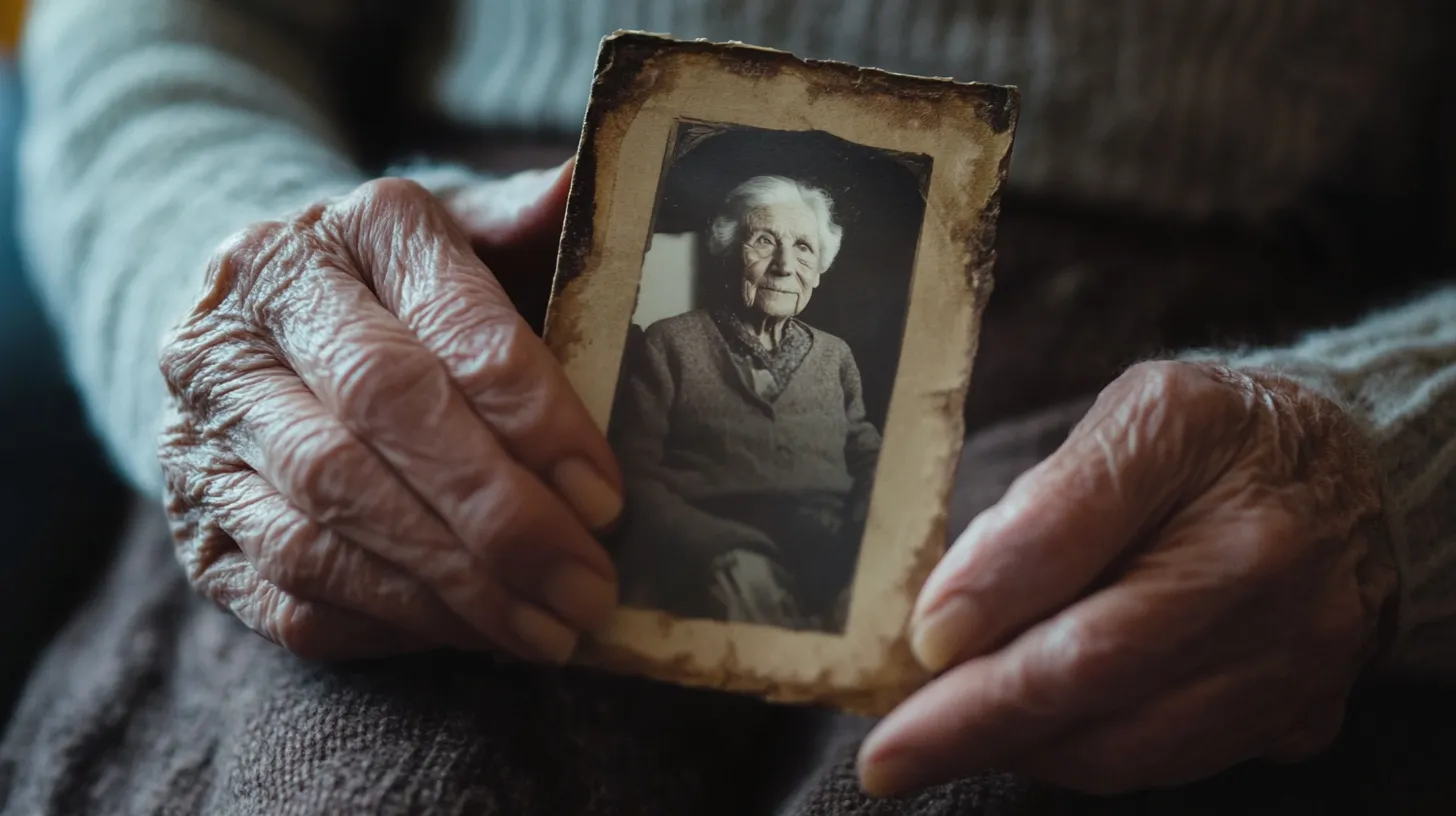
Think about what you actually know about your parents' lives before you existed. Not the stories they've told you, the curated, repeatable ones that have become family legend, but the full shape of who they were before you arrived. Their fears at twenty-five. What their marriage felt like in the first years, before you were there to observe it. The choices they made under pressure, without knowing how they'd turn out. The things they wanted and didn't get. The things they got that surprised them.
For most people, the answer is: very little. We know our parents as parents. We know them in the roles they played toward us. The people they were before, and still are, beneath those roles, remain largely unknown.
This is one of the quiet losses of ordinary family life. And it becomes irreversible much sooner than any of us expect. Research based on the Ebbinghaus forgetting curve shows that the average person loses roughly forty percent of a memory's detail within the first year if it is not recorded or revisited. Every year you wait, the story becomes thinner.
The story you can still recover is not their whole life. It's the story only they can tell. Once they're gone, that version is gone too.
Why do most families never do this?
Most families never preserve a parent's story because of a combination of busyness, awkwardness, and the false assumption that there will always be more time. Everyone is busy, visits are short, and there is always something more pressing than sitting down to have a real conversation about the past. But that's not the whole explanation.
The deeper reason is awkwardness. Asking your mother to tell you about her inner life at thirty, or your father to describe his biggest failure, feels strange in a way that asking about their health or the weather does not. These conversations require both parties to step outside the roles they've always occupied, parent and child, and meet as human beings with equal, curious regard for each other. Many families never find that gear.
There's also the implicit assumption that there will be more time. The parents who are here today, still sharp, still mobile, still able to remember, they feel permanent in a way that the facts of biology don't support. The window for this kind of deep conversation is not open indefinitely.
How do you start the conversation?
The best way to begin is not with a formal interview but with a specific question embedded in an ordinary moment. Not "I want to record your life story," which can feel overwhelming or even morbid, but "I was thinking about something you mentioned once, and I wanted to ask you more about it."
Start with the concrete, not the abstract. "What was your apartment like when you first moved to the city?" opens more doors than "What was your early adulthood like?" Specific questions surface specific memories, and specific memories carry emotion and detail in ways that general reflections rarely do.
Once the conversation has started, follow it. Don't steer toward the stories you already know. The stories you already know are the polished ones, the ones safe enough to have been told before. The unpolished stories, the ones they haven't thought about in years, are often the ones that matter most.
What format should you use to record?
The simplest and most durable format is audio. A voice recording on your phone captures the way your parent actually speaks, the pauses, the particular turns of phrase, the moments where emotion comes through in the breath before the words. No amount of transcription fully reproduces what audio preserves.
Ask permission before recording, and be clear about what you're doing with it. Many people become more careful and less natural once they know they're being recorded. You may find that some of the best material comes before you turn the recording on or after you turn it off. If so, write it down immediately. Memory of a conversation fades faster than memory of an experience. The StoryCorps project, which has recorded over 600,000 interviews since 2003, has proven that even a single forty-minute recorded conversation between family members can preserve stories that would otherwise be lost within a generation.
Video adds a dimension that audio alone cannot: the face, the hands, the way someone holds their body when they talk about something difficult. But it also adds friction: setup, lighting, the self-consciousness that comes from being on camera. For a parent who is private or reserved, video may shut down the conversation that audio would have opened. Know your parent.
What should you capture beyond the words?
Alongside the recordings and notes, gather what still exists: photographs, letters, official documents, objects that carry meaning. A wedding photograph tells you something. A letter from a difficult period tells you more. An object your parent has kept for sixty years, one they have never explained, may tell you the most.
Ask about these things directly. "Why have you kept this?" is one of the most underrated family history questions. The answers are often surprising, and often lead to stories that wouldn't have surfaced any other way.
Also write down what you remember. Your memories of your parents, specific scenes, specific conversations, the way they behaved in moments you observed, are part of the story too. The biography of a parent always includes what the child witnessed, and that record will also fade if it isn't captured.
How do you turn raw material into something lasting?
You turn raw material into something lasting by shaping it into written narrative prose. Recordings and notes are not a memoir. They are the raw material for one. At some point, whether now while your parents are alive to review and add to it, or later when you are working from what you gathered, those materials need to be shaped into narrative.
A family memoir doesn't have to be long. A sixty-page document that tells your parent's story with care, honesty, and specificity is worth more than a thousand scattered files no one will ever assemble. It needs a structure, a frame that gives the reader a way through, and it needs to be written in prose rather than bullet points, because prose is how we experience other lives.
The work of preservation is only complete when the story can be read. Everything before that is just gathering.
Legacium
Help your parents tell their story, while there's still time.
Legacium's AI memoir guide can work with your parents directly, or help you shape the recordings and memories you've gathered into a finished narrative your family will keep.
Learn how it works