
By Legacium Editorial Team
Before the Stories Fade: 100 Questions Every Grandchild Should Ask
Most grandparents have never been properly asked about their lives. The window is narrower than it seems.
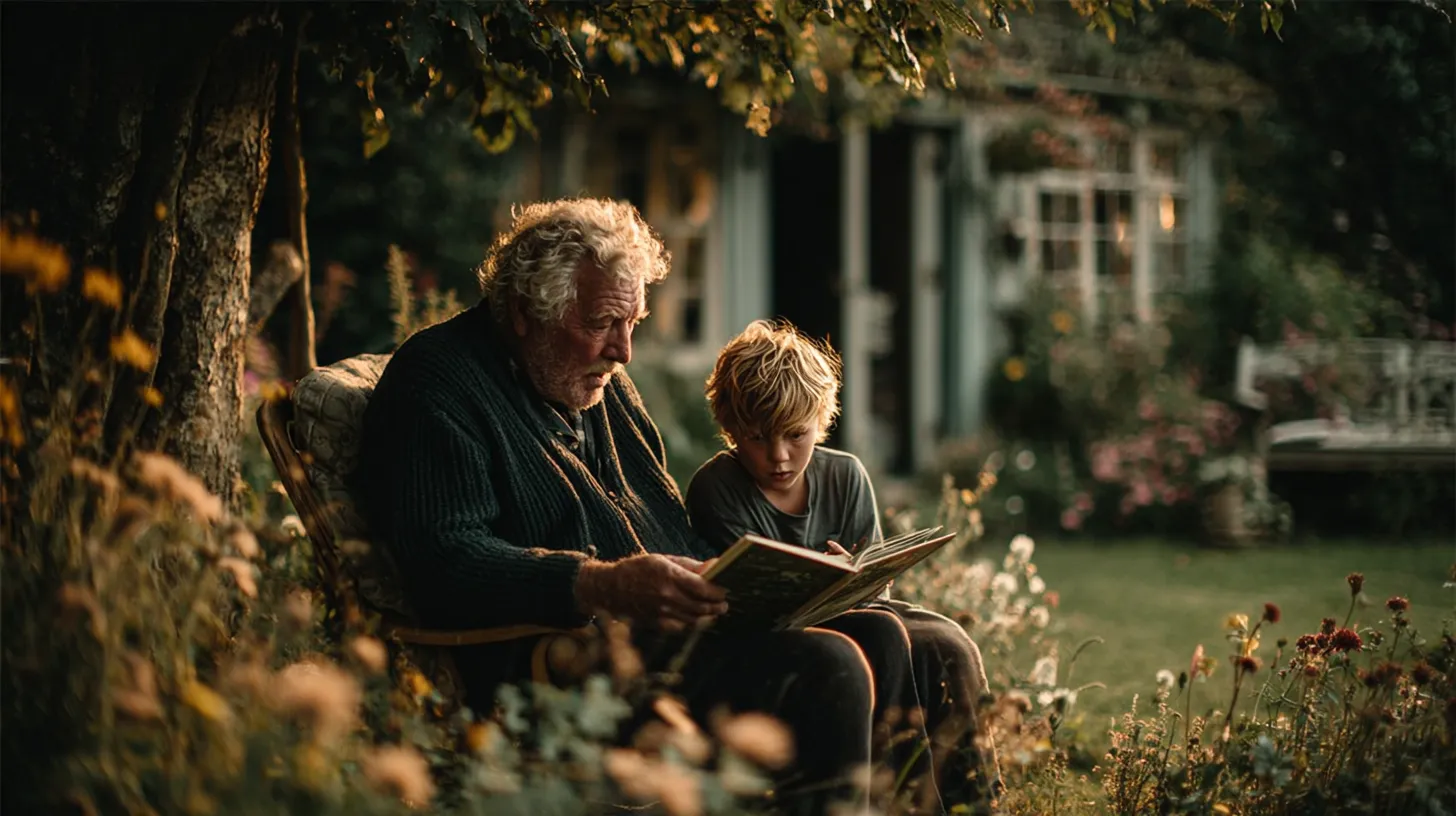
There is a particular kind of conversation that almost never happens between grandchildren and grandparents. Not the casual kind: the weather, the health updates, the ritual inquiries about school or work. Those happen constantly. The other kind: the real questions. The ones that treat a grandparent as a full human being with an inner life, a past that predates you, a set of experiences you know almost nothing about.
Most people never ask those questions while they still can. And when the opportunity is gone, the regret is of a very specific and permanent kind.
The questions below are designed to open those conversations. They are organized by theme, not difficulty. Some will yield long answers. Some will yield silence, then something unexpected. A few may not be welcome, and you will learn something from that too.
Research by Marshall Duke and Robyn Fivush at Emory University found that children who know their family stories, as measured by their "Do You Know?" scale, have higher self-esteem, a stronger sense of identity, and greater resilience in the face of adversity. Knowing where you come from turns out to be one of the most reliable predictors of emotional well-being. These questions are a starting point for building that knowledge.
You don't need to record everything. You need to ask one real question, and then listen without rushing to fill the silence.
What was their childhood really like?
Questions 1–20
- Where were you born, and what do you know about that place?
- What is your earliest memory?
- What was your childhood home like? Describe it room by room.
- What did your neighborhood smell like when you were young?
- What did your parents do for work?
- Were you close to your parents? Who were you closer to?
- What do you wish you had asked your own parents before they died?
- Did you have siblings? What was your relationship like with them then, and later?
- What were mealtimes like in your house?
- What did your family fight about?
- What was the religion, if any, of your household?
- What was your mother like as a person, not as a mother, as a person?
- What was your father like as a person?
- Were there relatives who came and went, who shaped your early life in ways you only understood later?
- What games did you play as a child? Who did you play them with?
- What did you want to be when you grew up?
- What were you afraid of as a child?
- What did your family celebrate? How?
- Did your family have money when you were growing up? Did you understand that at the time?
- What did childhood feel like? Was it happy? Complicated? Something else?
Who were they becoming in their twenties and thirties?
Questions 21–40
- What were you good at in school? What were you bad at?
- Was there a teacher who changed you?
- Did you go to university or college? If so, what was that like?
- If you didn't go, do you wish you had, or did things work out better this way?
- What was your first job?
- What's the job you're most proud of having done?
- Was there a career path you almost took that you still think about?
- When did you first feel like an adult?
- What did you do for fun in your twenties?
- Who were your closest friends in those years? What happened to them?
- What did people your age worry about then that people don't worry about now?
- What did you believe about the world at twenty-five that you no longer believe?
- Were there years that felt wasted, that you wish you'd lived differently?
- What were you running toward in your youth? What were you running from?
- Did you ever live somewhere other than where you grew up? What was that like?
- What was the hardest job you ever had?
- Did you have a mentor? What did they teach you?
- What did money mean to you in those years?
- What did you read, listen to, watch? What moved you?
- What did you think your life would look like at sixty, when you were thirty?
What shaped their understanding of love and family?
Questions 41–60
- Where and how did you meet your partner?
- What did you first notice about them?
- Were you nervous? What did you talk about?
- How long did it take to know they were the one?
- What did your parents think of them?
- What was your wedding like? What do you remember most?
- What has been the hardest part of being married?
- What has made your marriage last, or what do you wish had been different?
- Were there relationships before that mattered, that shaped how you loved?
- What did becoming a parent feel like the first time?
- What did you get wrong as a parent that you wish you could redo?
- What do you think you got right?
- Was there a moment when you saw yourself in your child and it unsettled you?
- What did you sacrifice for your family that you never talked about?
- What do you want your children to know about you that they don't?
- What do you want your grandchildren to know about who you are?
- Is there someone in the family whose story you think is most important to preserve?
- What family secret do you think everyone knows but no one talks about?
- What would you tell your younger self about love?
- What does love look like to you now? How has your understanding of it changed?
What hardships did they survive, and how?
Questions 61–80
- What is the hardest thing you've ever been through?
- How did you get through it?
- What do you know about struggle that I don't yet understand?
- Were there times you thought about giving up on something, and didn't? What kept you going?
- What historical event most shaped your life: war, recession, migration, something else?
- What was it like to live through that time?
- Have you ever been afraid for your safety or your family's safety?
- Has your country or community ever let you down in a serious way?
- Is there injustice you experienced that you've never fully spoken about?
- Have you ever lost someone suddenly and without warning? How did that change you?
- What's the loss you've never fully recovered from?
- Is there a decision you made under pressure that you're still not sure was right?
- Have you ever had to choose between loyalty to your family and what you believed was right?
- What did you have to learn to forgive, in others, or in yourself?
- What do you know now about resilience that you wish someone had told you?
- Was there a period in your life you almost don't recognize yourself in?
- What kept you together during the worst of it?
- What does hardship do to a person? What did it do to you?
- Is there grief you're still carrying?
- If you could go back and carry someone through their hardest time differently, who would it be?
What do they believe, and what questions still remain?
Questions 81–100
- What do you believe in, really, at the deepest level?
- Has your faith, or lack of it, changed over time?
- What does a good life look like to you?
- What do you think you were put on earth to do?
- Are there regrets that still keep you up at night?
- Is there something you always meant to do and never did?
- What do you wish you had been braver about?
- What are you most proud of, not an achievement, but something about who you are?
- Is there something about you that most people misunderstand?
- What do you wish people knew about your generation that they don't?
- What do you think the next generation gets wrong about life?
- What do you think they get right?
- What do you hope your family remembers about you?
- What do you hope they forget?
- What do you think happens after we die?
- Are you at peace with your life? What would peace look like?
- What question do you most want someone to ask you?
- What story about yourself have you been carrying that no one else knows?
- What do you want me to understand about who you are?
- If you could say one thing to the people who come after you, children, grandchildren, great-grandchildren you'll never meet, what would it be?
How should you use these questions?
The most effective approach is to choose just three to five questions that match the moment, then listen deeply rather than rushing through a list. Here is how to make each conversation count.
Ask the question and listen without interrupting. Don't read this list to your grandparent like a form. Pick three. Ask the first one and then stop talking. Let the silence work. Real conversation is not a checklist. It is the willingness to go somewhere unplanned.
Follow the answer with gentle follow-ups. Follow the answer where it goes rather than moving to the next item. The tangents are often the most meaningful part. If they mention a name, a place, or a year you haven't heard before, ask about that.
Record the conversation. Record the conversation if they're comfortable with it. Even a voice memo on your phone is infinitely better than nothing. If they're not comfortable with recording, take notes afterward, even imperfect ones. Memory fades faster than we expect.
Revisit and add to the story over time. One conversation is a beginning, not an ending. Return to these questions over weeks and months. Each session will surface memories the previous one did not reach.
And if they're resistant, if they say their life isn't interesting, or they don't remember, or there's nothing worth telling, ask them the question on this list they'd least expect: What do you wish someone had asked you that no one ever did?
That one usually works.
Legacium
Turn these conversations into a memoir they'll read for generations.
Legacium helps you take the stories you gather, from interviews, recordings, and memory, and shape them into a finished memoir. Guided by AI, completed in a year.
Learn how it works